 How to Become a Net Zero Company

 Our Technology
 Climate Glossary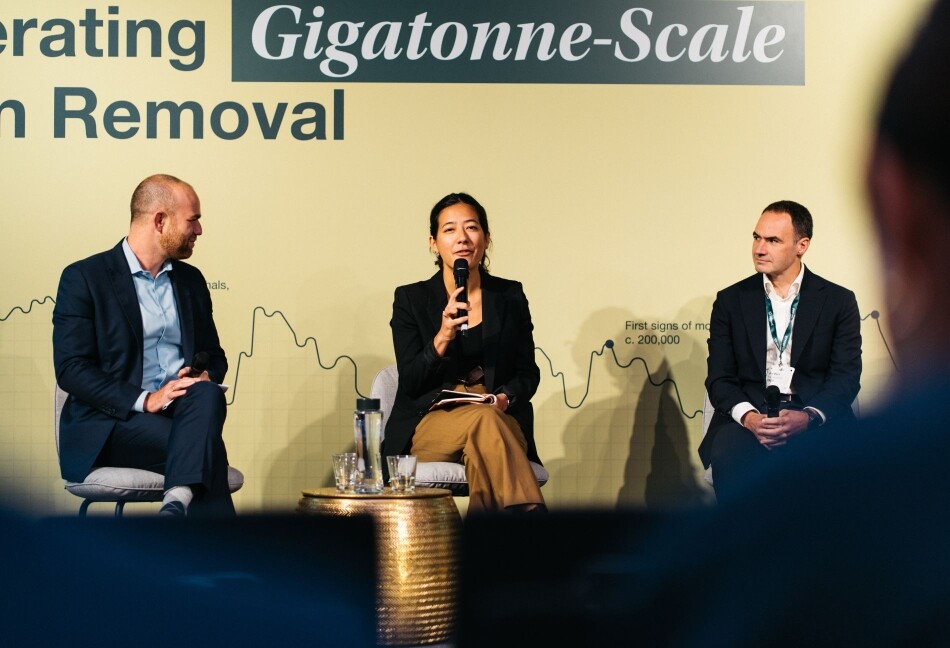
Carbon removal will not scale on groundbreaking science alone. The unlock is finance that matches how projects are built, operated, measured and verified over many years. On stage at Carbon Unbound Europe in London, I laid out what it takes to fund that reality, and why we must get serious about bankability. Scale comes from repetition, not novelty. We reach real numbers by running the same playbook again and again.
The Investment Landscape in 2025

Seemingly, the VC has cooled for climate this year. That does not mean growth is over; it means founders should be prepared for a long winter for equity that wants quick payback. Five year in, five year out fund cycles simply do not fit infrastructure-like projects that deliver climate outcomes over a decade or more. Debt, not VC, will carry most of the scale once projects are proven and demand is visible.
Public funding still matters, especially to de-risk early stages and crowd in private capital. Grants, first loss facilities and policy tools can help projects reach the point where commercial debt can step in. But public money is not a substitute for a bankable project.
There Is No “Green Finance” Shortcut
I addressed a common myth head on. There is not a separate pot of money that ignores risk. Lenders cannot afford to lose capital. The rule is simple: make projects bankable, and finance will show up. Stay speculative, and it will not. That is not a bad thing; it is how capital disciplines quality.
Bankability in carbon removal means three things.
- Durable demand you can contract against, for example multi-year offtake from credible buyers.
- Operational control and cost visibility across the supply chain.
- Measurement you can trust, captured and traced in a way that stands up to verification.
Why Debt Is the Path to Scale
Debt matches the shape of most CDR businesses once they are past the pilot stage. It lets operators finance working capital and equipment against contracted revenue, and it scales when risk is well understood. That is why blended structures, credit guarantees and specialist lenders will matter far more than another equity round. The goal is not one newsworthy deal; it is a repeatable structure we can copy site to site and season to season.
The scalable structures beneath this are not unfamiliar. Standard project design, existing supply chains, consistent MRV and a single audit trail that runs from quarry to field to lab to verification. When you repeat the same playbook project to project and region to region, risk falls, costs fall, and ERW becomes an investable asset.
A live example is UNDO’s latest agreement with Microsoft: 28,900 tonnes of permanent removal supported by a dedicated debt facility from Inlandsis and underwritten by CFC. This is the kind of structure that lets an operator draw alongside fieldwork, repay on delivery, plan multi-year and keep evidence at the core. This follows Microsoft’s earlier purchases of 5,000 tonnes and 15,000 tonnes that led to this third, larger deal.
On the demand side, Barclays’ first-ever offtake this autumn shows how mainstream buyers are moving beyond pilots and into meaningful volumes. It is the largest ERW deal of its kind in Britain from a British offtaker, and it signals to lenders that contracted demand exists.
Regulation Should Look Like Other Long-Lived Risk Management
I drew an analogy with sectors that manage long-lived liabilities. When regulation is clear, credible and enforced, finance is willing to price and carry risk. Carbon removal needs the same mindset, rules that define permanence, liability and monitoring in plain terms, with verification pathways investors can get behind.
Loose rules slow capital, tight rules channel it. Harmonised rules let us lift and shift one MRV package and one contract template across regions, which is how you scale fast without adding risk. Align definitions across borders so projects are comparable and credits are tradable. Require transparent registries, third-party audits and clear reversal obligations backed by buffers or insurance. Set predictable timelines for permitting and reporting so lenders can price risk with confidence.
Where CDR Companies Stall in Fundraising
- Between grant and growth, when projects need working capital but have not yet built the data room that a lender requires.
- On MRV, when measurement is model-heavy, manual or not traceable, which weakens a bank’s ability to underwrite.
- On unit economics, when costs depend on bespoke processes instead of repeatable supply chains.
The fixes are practical. Lock in offtake, standardise operations and build MRV that produces auditable, time series data with clear deductions for emissions and losses.
What Attracts the Right Investors
- Buyers with repeat purchases. Multi-year offtakes from blue chip buyers are the strongest signal. Microsoft’s three purchases are a good example of confidence building over time.
- Debt partners with climate mandates. Specialist funds like Inlandsis can structure facilities around real project needs, then syndicate as risk declines.
- Banks testing the category. Barclays’ first ERW deal shows how corporate buyers and lenders can move together.
How UNDO is Making ERW Bankable
UNDO’s approach is built for lenders. In Ontario, our team demonstrated end-to-end operations at kilotonne scale as part of the $100M PRIZE Carbon Removal competition with 34,000 tonnes of wollastonite deployed, 30 monitored sites, full LCA accounting and a verified net 1,209 tonnes of CO₂ removed in the competition window.
Every tonne is traced through NEWTON, our operational data platform, and deductions for emissions and losses are applied transparently. We use one operating playbook, from quarry to field to lab to verification, so we can add crews and acres without reinventing the process.
That discipline feeds a clear cost and scale plan. In Ontario, we are set to scale annual deployment, supported by secure rock supply, stronger logistics and ongoing MRV cost reductions. For lenders, that looks like repeatable deployment, contracted demand and measurable outcomes, which is the foundation for project debt.
What This Means for 2026
- Equity remains useful for R&D, new markets and tech risk, but expect it to be selective.
- Debt will expand where offtake, MRV and unit economics are strong.
- Policy that clarifies accounting, permanence and liability will lower risk premiums and accelerate scale.
- Buyers have outsized influence, each credible multi-year contract pulls forward finance.
- The next step is programmatic finance, moving from one off transactions to facilities that fund portfolios of repeatable projects.
A Note From the Panel Room
Alongside my points, fellow speaker Marcel Huber, CEO and Co-Founder of SYNCRAFT, underlined a related truth from the biochar side of the market: bankable projects rarely rely on credits alone. Co-products and co-benefits strengthen the case for finance, particularly in markets where there is already a commodity price. Across CDR, diverse, proven revenue streams make lenders more comfortable.
Both Erica Vertefeuille of Terra Natural Capital and I also stressed how complex and hard debt is to do. The structures are intricate, diligence is unforgiving, and the bar for bankability is high.
The Ask
If you are a corporate buyer, a lender or a policymaker, I have the same request: make projects bankable. Contract real demand, tighten MRV and structure debt that fits how projects work on the ground. When results are repeatable, you can finance them.
Draw alongside fieldwork, repay on delivery, plan multi-year and keep evidence and quality at the core. If you want scale, write multi-year master agreements with volume ramps and options so we can plan equipment, crews and rock supply with confidence.
 " alt="">
 With a background in ecology and scaling businesses, Jim founded UNDO to combat climate change via enhanced rock weathering. His vision is to realise ERW’s potential for relatively low-cost, large-scale carbon removal with a permanence of 100,000+ years. UNDO strives to create durable, high-quality carbon removal credits with added co-benefits.
